
Even in suffering,
there is meaning.
Catholic psychotherapy resources for clinicians caring for patients with chronic suffering or at the end of life.
THE DIFFERENCE
Your patient isn’t asking what’s next. They’re asking why.
Most of us were trained to solve problems. Pain gets a treatment plan. Grief gets a coping skill. But chronic suffering and dying ask something else of us: presence, and room for the hardest questions.
Listen first.
Understanding comes before any answer.
Make room for the questions.
Doubt and anger belong in the conversation.
Find meaning that holds.
Peace is possible even in the middle of sorrow.
RESOURCES
When a patient is suffering, here’s where to start.

(DOCUMENT CLASSIFICATION)
How the Positive Functioning of the Spousal System Affects Burnout Rates Amongst Licensed and Vocational Ministers within a Church Setting
Samuel Baney, MA, AMFT
Mitchell Pohl, MA, AMFT
Throughout history and into the current age, religious institutions (i.e., churches, synagogues, temples, and other communal places of worship) have traditionally served as primary sources of structure and stability within communities around the globe, and those who serve as ministers often do so on the front lines of human experience, serving as a primary support for those in crisis within their community.

Perfecting the Circle: Equipping Helpers and Healers To Approach End of Life Issues with Empowerment and Effectiveness
(DOCUMENT CLASSIFICATION)
Samuel Baney, MA, AMFT
Mitchell Pohl, MA, AMFT
As healthcare professionals, our work often puts us on the frontlines of human experience. Whether a patient has just learned of having a terminal illness, sitting with someone who has just lost a loved one, or simply encountering a person in a state of despair, we sometimes find ourselves in the very difficult position of sitting with someone in the throes of deep psychological pain.
Rooted in the Church. Shaped by Frankl.
OUR APPROACH
Our work stands on Catholic philosophy and theology. It’s shaped by Viktor Frankl’s logotherapy, which holds that meaning can be found even in suffering we can’t avoid. Together, they help people meet suffering with more freedom, not less.
OUR NAME
We take our name from St. Anselm, who described theology as “faith seeking understanding.” Frankl spent his life on a parallel question: how we find meaning, even in suffering. Our work lives where the two meet.
WHO WE ARE
We’re trained for the conversations most people avoid.
California Marriage & Family Therapist (LMFT 117161)
Colorado Marriage & Family Therapist (LMFT MFT.0003200)
Utah Marriage & Family Therapist (LMFT 14289832-3902)
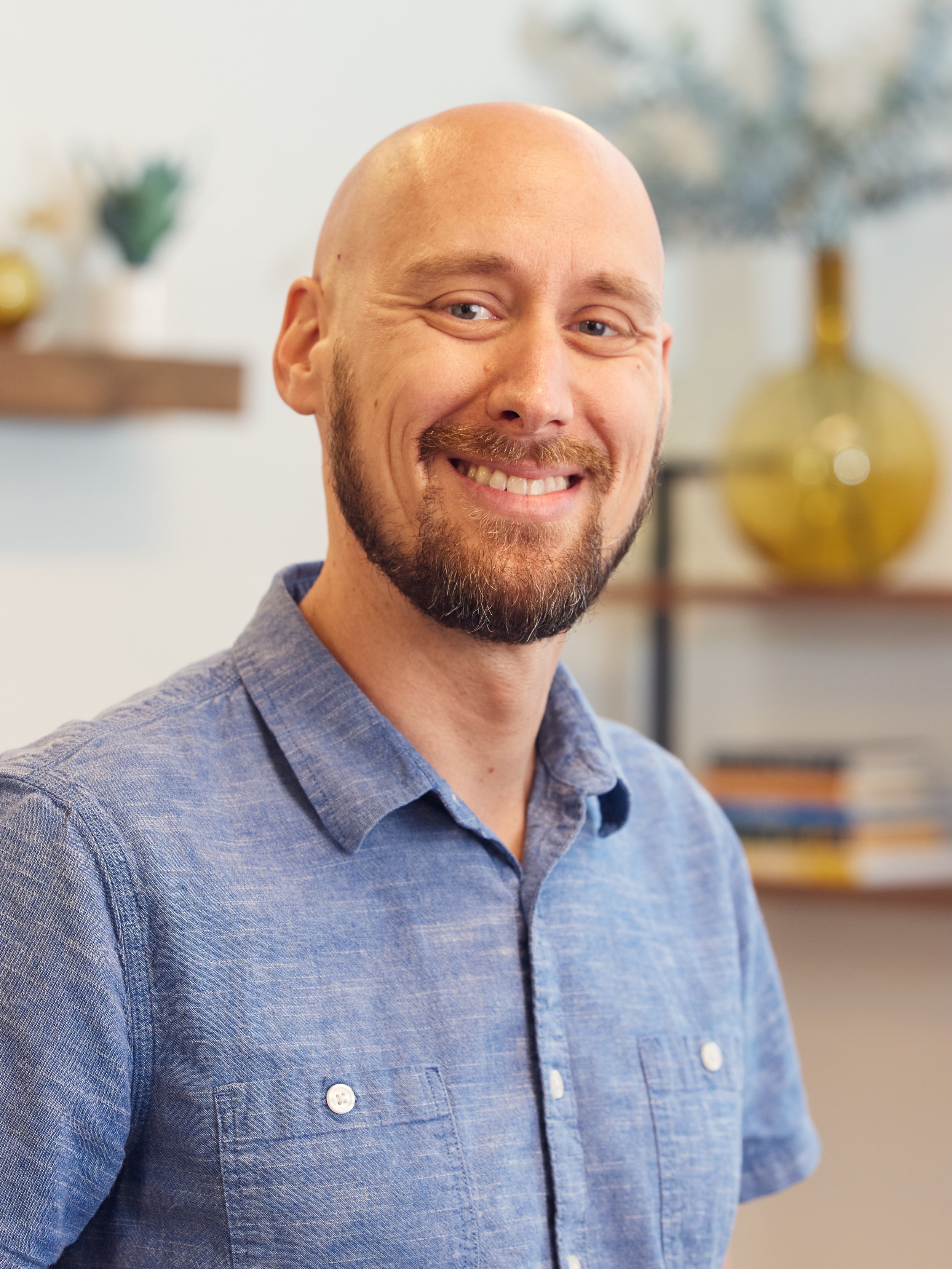
Mitch Pohl, LMFT
Mitch’s faith journey began his freshman year of high school, after years of patient invitations from his grandmother and uncle. What started in youth groups grew into ministry: he went on to serve as a youth pastor and on the worship team at a small Assemblies of God church in Southern California.
Along the way, the deeper he went into the history and theology of the early Church, the more his heart softened toward the Catholic Church. In 2014, answering a clear call from God, he entered the Church through RCIA (now called OCIA).
Today, Mitch brings psychology into the life of the Church to help people who are suffering, especially those who minister to others and those too often overlooked. He loves this work and still can’t quite believe it’s his job.
Ask anyone who’s talked with him for more than two minutes: sarcasm is his first language, and English comes second. Beyond his incredible family and friends, Mitch counts his greatest blessings as his wife, Nicole, and their children, James and Lina.
"I don't fear the dark; I think the work that means the most to me happens when we get to let the Light in, and helps others see themselves, their situation, and the world in a more empowered way."
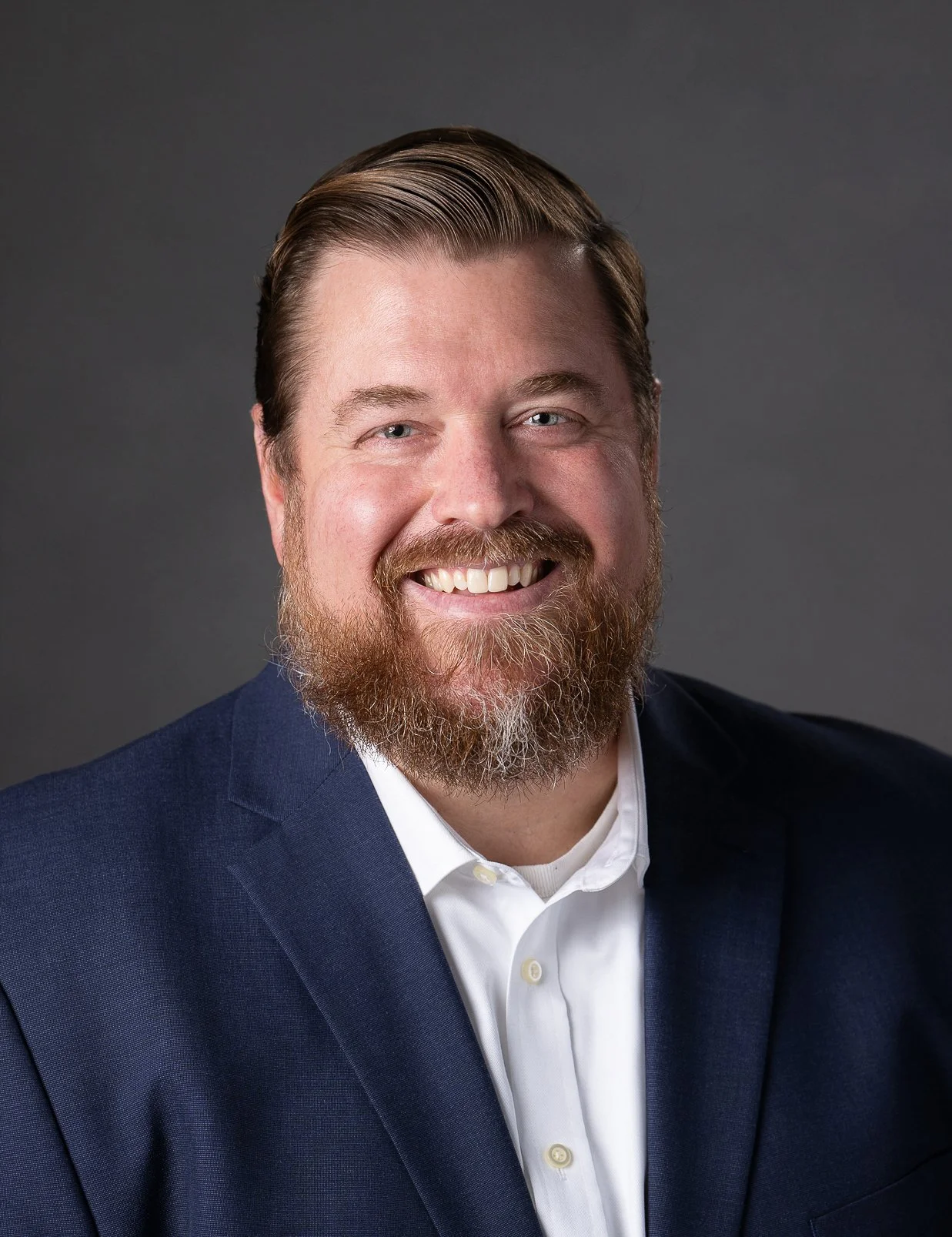
Samuel Baney, M.A. LMFT, CCTP
Alabama Marriage & Family Therapist (L596)
California Marriage & Family Therapist (LMFT124242)
Samuel’s path to becoming a therapist began while he was on staff at a church, overseeing its community care ministries. More and more, he found himself in the role of counselor, helping parishioners through all kinds of life’s troubles. When it came time for graduate school, he set aside his plans for a theology degree and pursued Marriage and Family Therapy instead. He still loves theology, but walking alongside others as a therapist has become his true calling.
His respect for therapy began even earlier, through his own struggles and how much a therapist helped him through them. Those experiences, along with his work in the church, taught him how deeply people suffer, and how they can grow through that suffering. Helping others navigate those difficulties became his life’s work. Over the years, he has had the privilege of working with people from every walk of life, facing every kind of challenge. Though he was the one helping, each of them has shaped him in ways he never expected. He finds something sacred in that.
Samuel’s approach rests on one conviction: every human life, whatever its circumstances, has infinite value and inherent meaning. Everything else follows from that. Drawing on theology, philosophy and psychology, he sees each person as a whole: body, mind and spirit, inseparable from one another. The greatest of these, and the one that unites them, is the spirit. It is what allows us to transcend even the hardest situations life places us in. Wherever his clients are starting from, his goal is to help them find meaning and purpose, grow through suffering and hardship, and live fully and authentically.
“One line on why you do this work”
STAY CONNECTED
The next hard question will come. We’ll be here when it does.
❕ If you’re in crisis, call or text 988 (US) or go to the nearest emergency room
LOOKING FOR A THERAPIST?
You shouldn’t have to carry this alone. Let us help you find care.
If you or someone you love is living with chronic suffering or facing the end of life, we can help you find care. Clinicians can refer patients here too.